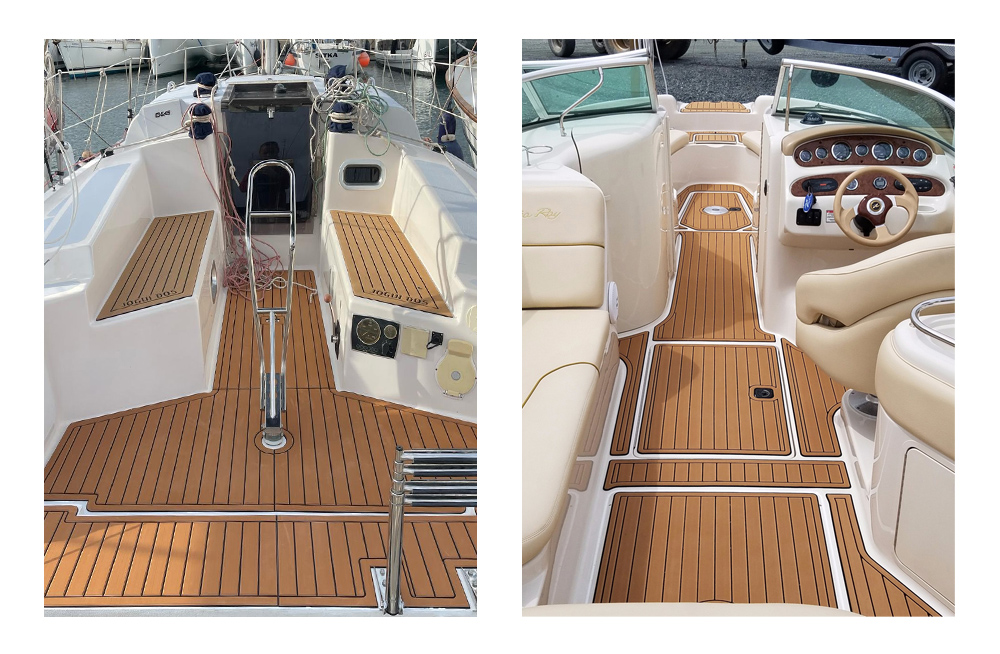
1. Tropical Climates: Defying Heat and UV Radiation
Tropical regions subject boat decks to intense UV exposure, salt spray, and temperatures exceeding 120°F. EVA’s closed-cell structure provides exceptional heat resistance, peaking at 110°F under direct sunlight—35°F cooler than teak.
Key Advantages:
Heat Reflection: Blocks 85% of solar radiation, allowing barefoot comfort even in extreme heat.
UV Stability: Resists fading, outperforming faux teak in color retention.
Selection Tips:
Color Choice: Light-colored EVA reflects 60% more light than dark shades, reducing heat absorption.
Thickness: Opt for 6mm tiles; thinner options may warp under sustained heat.
Thickness: Opt for 6mm tiles; thinner options may warp under sustained heat.
2. Cold Climates: Flexibility Amid Freezing Temperatures
Sub-zero conditions demand materials that resist brittleness. Low-density EVA (<0.8g/cm³) fails below 15°F, but high-density variants (≥0.9g/cm³) remain elastic even at -40°F.
Key Advantages: Cold Flexibility: Maintains elasticity, preventing cracks in freezing temperatures.
Slip Resistance: Textured surfaces like diamond grooves enhance traction on icy decks.
Selection Tips:
Density: Verify product datasheets for ≥0.9g/cm³ density.
Installation Gaps: Allow 1/8” between tiles to accommodate contraction.
Installation Gaps: Allow 1/8” between tiles to accommodate contraction.
3. Humid Environments: Combating Moisture and Mold
Humid docks and marinas breed mold and rot in absorbent materials. EVA’s closed-cell structure repels water, ensuring longevity in wet conditions.
Key Advantages:
Zero Absorption: Prevents mold growth and rotting, even in perpetually damp settings.
Odor Resistance: High-quality EVA avoids moisture trapping, a flaw in open-cell, low-cost alternatives.
Selection Tips:
Avoid Cheap EVA: Opt for closed-cell products to prevent moisture retention and odor.
Non-Porous Surface: Ensures easy cleaning and durability in saltwater environments.
Non-Porous Surface: Ensures easy cleaning and durability in saltwater environments.
4. Universal Selection and Installation Guidelines
Material Quality: Prioritize closed-cell EVA with certified UV and thermal stability.
Climate-Specific Design: Match color, density, and texture to regional challenges.
Professional Installation:
Follow guidelines for gaps and adhesive use to prevent warping or buckling.
EVA marine flooring performs exceptionally across various climates, offering heat resistance, cold flexibility, and water impermeability.By choosing the right density, color, and texture—and following proper installation guidelines—boat owners can ensure long-lasting durability and comfort.
Whether cruising in tropical waters, braving cold climates, or docking in humid marinas, EVA stands as a resilient and cost-effective solution, setting a new standard for marine decking.
Whether cruising in tropical waters, braving cold climates, or docking in humid marinas, EVA stands as a resilient and cost-effective solution, setting a new standard for marine decking.